
As an Amazon Associate, I earn from qualifying purchases.
Some days, photography feels like a chase. You’re walking faster than you meant to. Your hands are a little tense. You take the photo and immediately wonder if you should take another.
A tripod changes that — not by making you more technical, but by making you slower. When the camera is supported, something in your body relaxes. You start looking at the frame instead of just filling it.
I’ve used tripods from different brands over the years, starting back when I carried a simple Kodak in Japan and had no idea what I was doing. What I’ve learned is that the best tripod isn’t the tallest or the most spec-heavy. It’s the one you actually bring.
What to Look for in a Travel Tripod
It doesn’t need to be perfect. It needs to be light enough to carry without thinking about it, fast enough to set up without interrupting a walk, and stable enough for the kind of photos you actually take.
A tripod that stays in the closet because it’s too heavy or too complicated is worse than no tripod at all. The goal is something that lives in your bag and comes out without effort.
Four Tripods Worth Considering
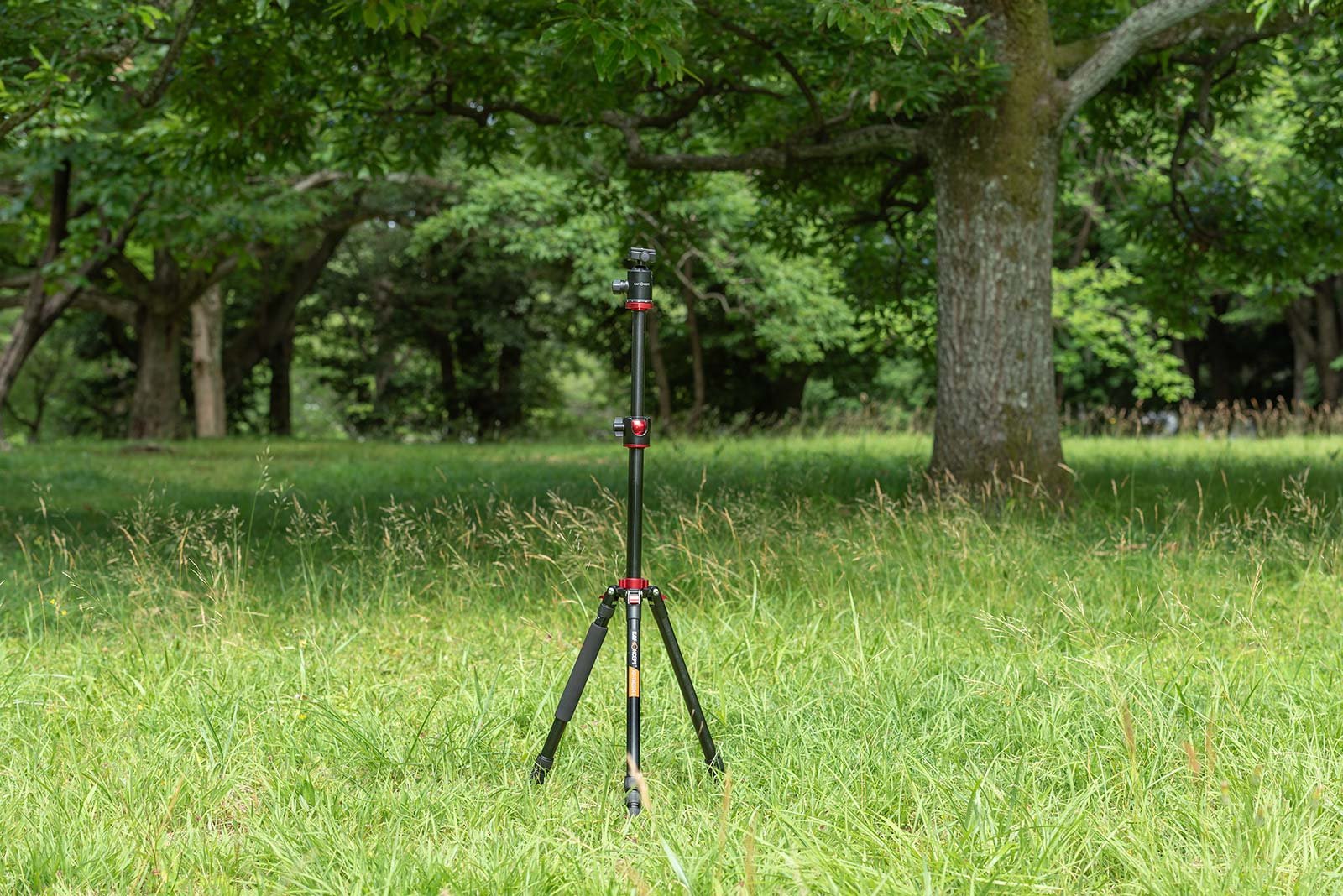
K&F Concept 64″ Travel Tripod (O234A1+BH-36)
The tripod I’ve used from K&F Concept, and the one I’d recommend first for photographers who want something light and practical.
It folds down to about 15.5 inches and weighs just over 2.5 lbs with the ball head. Sets up quickly with flip locks, no tools, no fiddling. The 360-degree ball head handles most angles you’d actually shoot. Load capacity of 17.6 lbs means it holds a DSLR or mirrorless camera without issue.
It doesn’t look or feel like professional gear — which is part of why it works. You set it up, frame the shot, and move on.
See on Amazon
K&F Concept 94″ Aluminum Tripod (T254A8+BH-28L)
A step up in size and stability, and the closest model available to the tripod I currently shoot with.
Reaches 94 inches fully extended, with a 25mm aluminum tube that handles heavier bodies and longer lenses. Converts into a monopod, which adds flexibility for moving through tight spaces or crowded locations. Ball head included, load capacity of 22 lbs.
Good choice if you shoot with a full-frame DSLR and want something that won’t flex in wind or on uneven ground.
See on Amazon
UBeesize 67″ Camera Tripod
The most accessible option in this list, and well suited for photographers who are just starting to use a tripod regularly.
67 inches tall, folds down compact, includes a phone holder and Bluetooth remote. Over 10,000 reviews on Amazon, Overall Pick. The kind of tripod you buy without overthinking it and find yourself actually using.
If your kit is a mirrorless camera or a compact DSLR and your outings are casual, this covers everything you need.
See on Amazon
Manfrotto Element MII
Manfrotto has been making tripods for a long time, and the Element MII shows it. Compact, 4-section aluminum, ball head included, folds down to about 16 inches.
Reaches 160cm extended and weighs 1.55 kg — light enough for travel without feeling fragile. Quick leg angle switching for low-angle shots. The design is clean and doesn’t draw attention.
It costs more than the others on this list, but if you want a brand with a long track record and plan to use the tripod for years, it’s worth the difference.
See on Amazon
Leave a Reply